
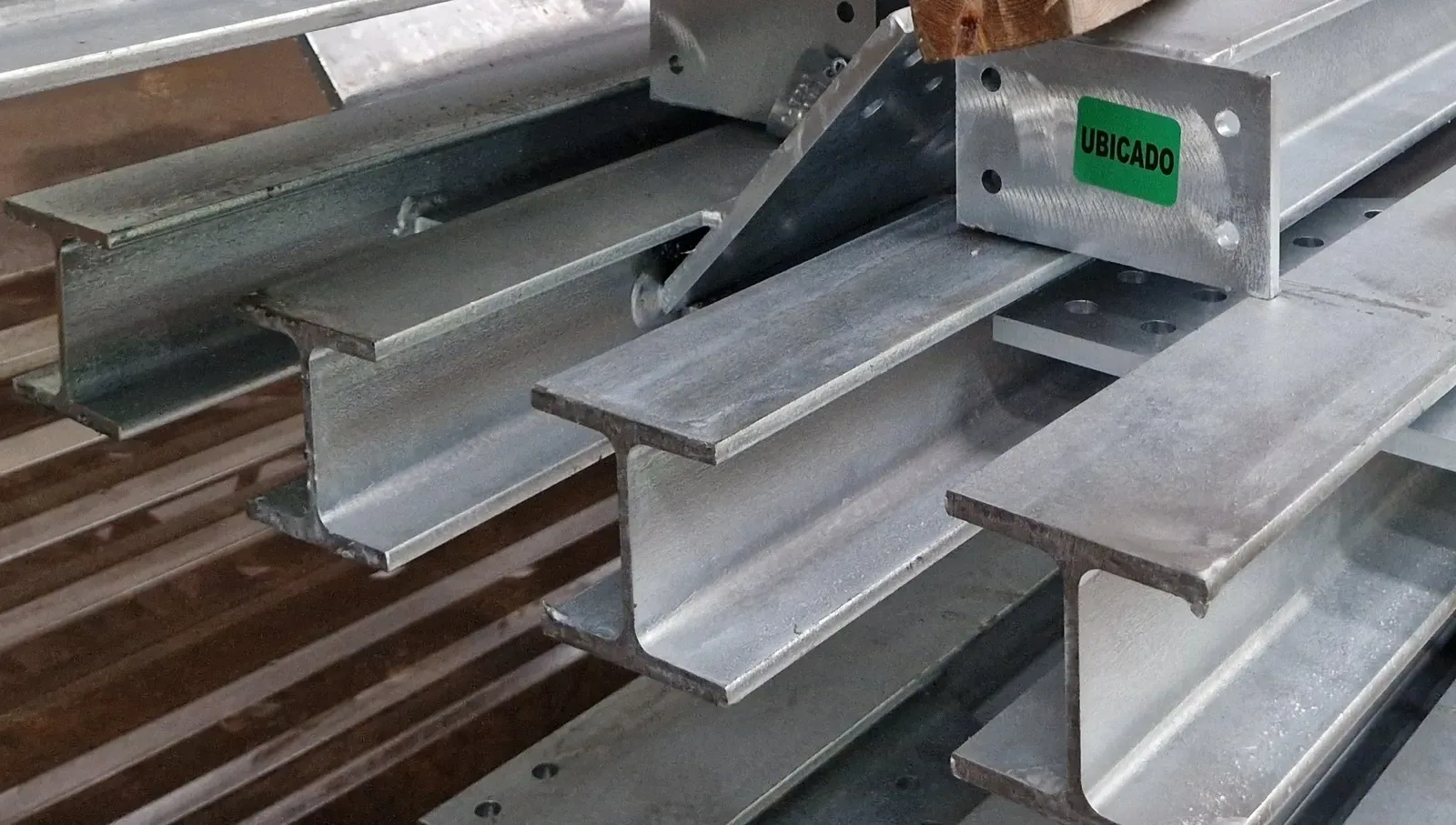
Corrosion protection
Hot-dip galvanising.
Steel protected against corrosion, ready to erect.
Molten zinc at around 450 °C
Protection bonded to the steel.
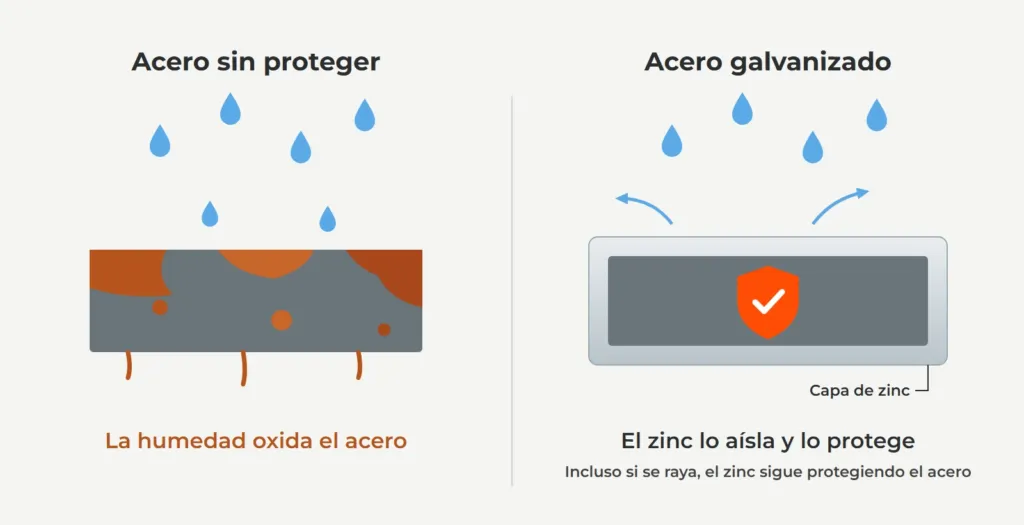
Parts are dipped in molten zinc, creating a metallurgically bonded zinc-steel layer that protects even if the surface is damaged.
You define the project, and we fabricate, galvanise and deliver every element.
Why galvanise
Four advantages.
Prevents corrosion
Dual action: barrier and cathodic protection.
Long service life
20 to 40 years maintenance-free, depending on the environment.
Impact-resistant
The coating withstands knocks, scratches and abrasion.
Less maintenance
No periodic repainting.
Attractive finish
DUPLEX system.
Galvanising + paint
Double anti-corrosion barrier.
RAL colour
Matt or satin finish, your choice.
Extreme environments
For C4 to CX environments.
Where it is used
For structures exposed to the weather.
Structures
Trusses, roofs, beams and frames.
Access
Walkways, stairs and platforms.
Dry construction
Galvanised sections and steel buildings.
Humid environments
Agricultural structures and areas that are hard to maintain.
In detail
What good galvanising depends on.
Zinc thickness
It varies with the type of steel and the geometry of the part, following ISO 1461.
Bath temperature
At around 450 °C, it stays below the threshold that could affect the properties of hot-rolled steel.
Part geometry
Complex parts, with hollows or welds, need more preparation.
FAQ
What we are asked most.
How long does it last?
Between 20 and 40 years maintenance-free, depending on the environment and the zinc thickness set by ISO 1461.
Can galvanised steel be painted?
Yes, it is the basis of the DUPLEX system.
Does it affect the strength of the steel?
For standard structural steel, its mechanical properties are maintained. For special steels, EN ISO 14713 should be consulted.
What is it used for?
Trusses, roofs, beams, walkways, stairs, platforms and agricultural structures.
What is hot-dip galvanising?
A coating in which parts are dipped in molten zinc at around 450 °C. A zinc-steel alloy layer forms, and if it is damaged, the surrounding zinc keeps protecting the steel.
What does the price depend on?
On weight, usually in €/kg, the geometry of the parts, the zinc thickness and the expected environment.
What is the difference between galvanising and painting?
Paint acts as a surface barrier. Zinc also provides cathodic protection: if the layer is damaged, the surrounding zinc keeps protecting the steel.
Protect your structure.
Tell us the approximate weight, type of structure and environment.