

When we talk about sustainability in construction, the steel versus concrete debate is still central. To look at it objectively, we analysed data from the Environmental Protection Agency (EPA) on the CO₂ emissions of both materials, and applied those values to a real case: a 600 m² industrial building with an average transport distance of 20 km to site.
📊 Baseline emissions per tonne of material
- Concrete: 265 kg CO₂ / tonne
- Steel: 694 kg CO₂ / tonne
At first sight, steel seems more polluting. However, the comparison changes completely when you take into account the amount of material needed and transport to site.
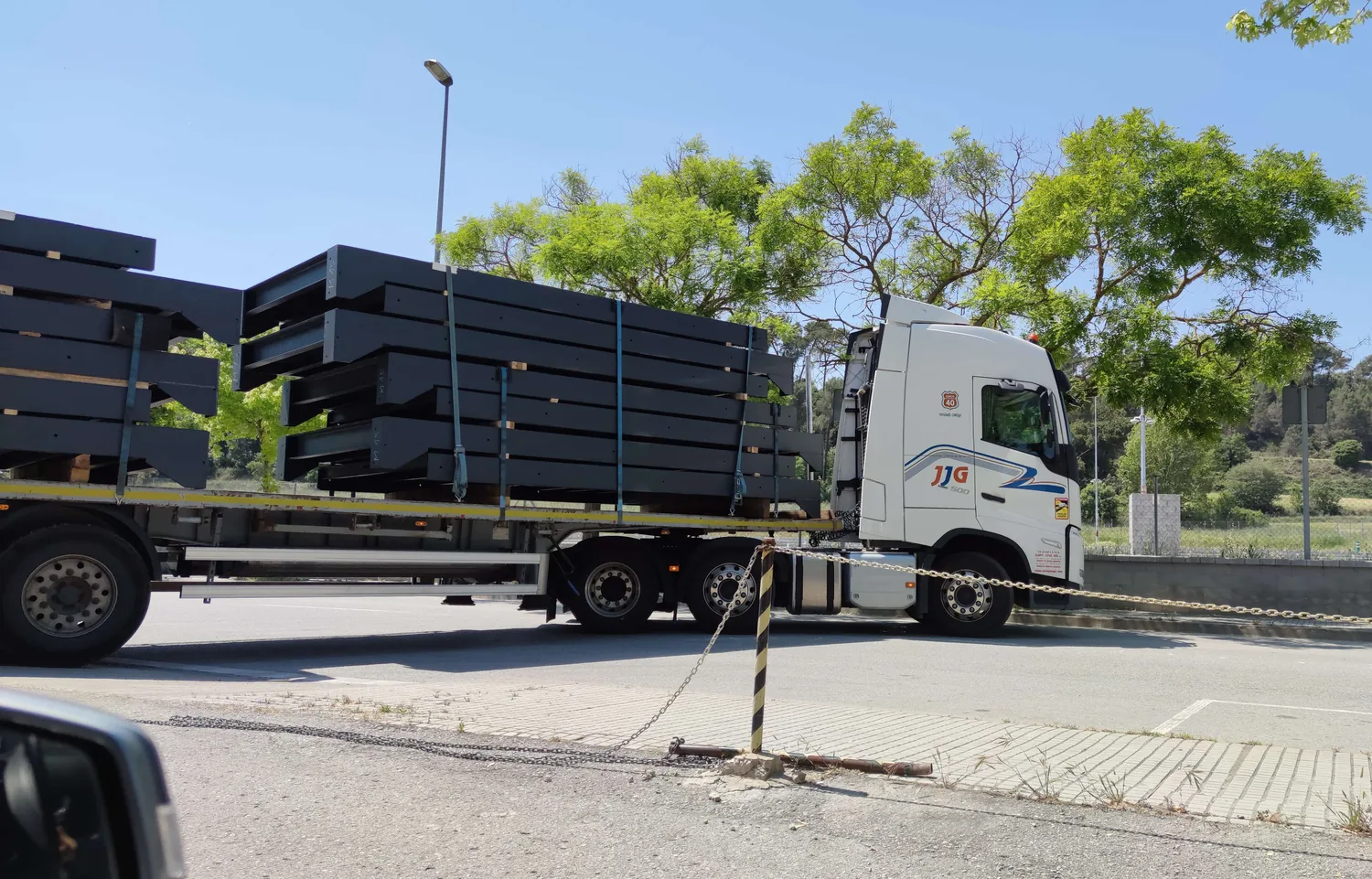
Worked example: one beam of an industrial building
Concrete beam (20 m long)
- Volume: 4 m³
- Density: 2.3 t/m³
- Total weight: 9.2 tonnes
- CO₂ emissions: 9.2 t × 265 kg CO₂/t = 2,438 kg CO₂
Steel beam (21 m, IPE section)
CO₂ emissions: 1.3 t × 694 kg CO₂/t = 902 kg CO₂
Weight: 1.3 tonnes
Transport of materials
A truck emits approximately 2.5 kg of CO₂ per litre of fuel and uses about 40 litres per 100 km.
Steel:
1 truck × 20 km × 2.5 kg CO₂/l × (40 l / 100 km) = 20 kg CO₂
Concrete:
12 trucks × 20 km × 2.5 kg CO₂/l × (40 l / 100 km) = 240 kg CO₂
Total CO₂ emissions from building the structure
| Material | Manufacturing emissions | Transport emissions | Total CO₂ |
|---|---|---|---|
| Concrete | 2,438 kg | 240 kg | 2,678 kg |
| Steel | 902 kg | 20 kg | 922 kg |
Conclusion
Although steel has higher emissions per tonne produced, its lower structural weight and transport efficiency make it the more sustainable option across the project as a whole.
In the case analysed, a steel industrial building produces 66% less CO₂ than its concrete equivalent (922 kg versus 2,678 kg of CO₂).
Steel also offers other environmental advantages:
- It can be reused and recycled almost 100%.
- It shortens construction time and reduces waste.
- It allows lighter, more efficient designs.
In summary
Steel not only provides strength and structural precision: it also contributes to cleaner, faster, more sustainable construction.
On industrial projects, choosing a steel structure is not just a technical decision: it is also a commitment to reducing the building’s real carbon footprint.